
Change Management: Remove Barriers
Change Management: Remove Barriers
Play Description
Pattern Summary
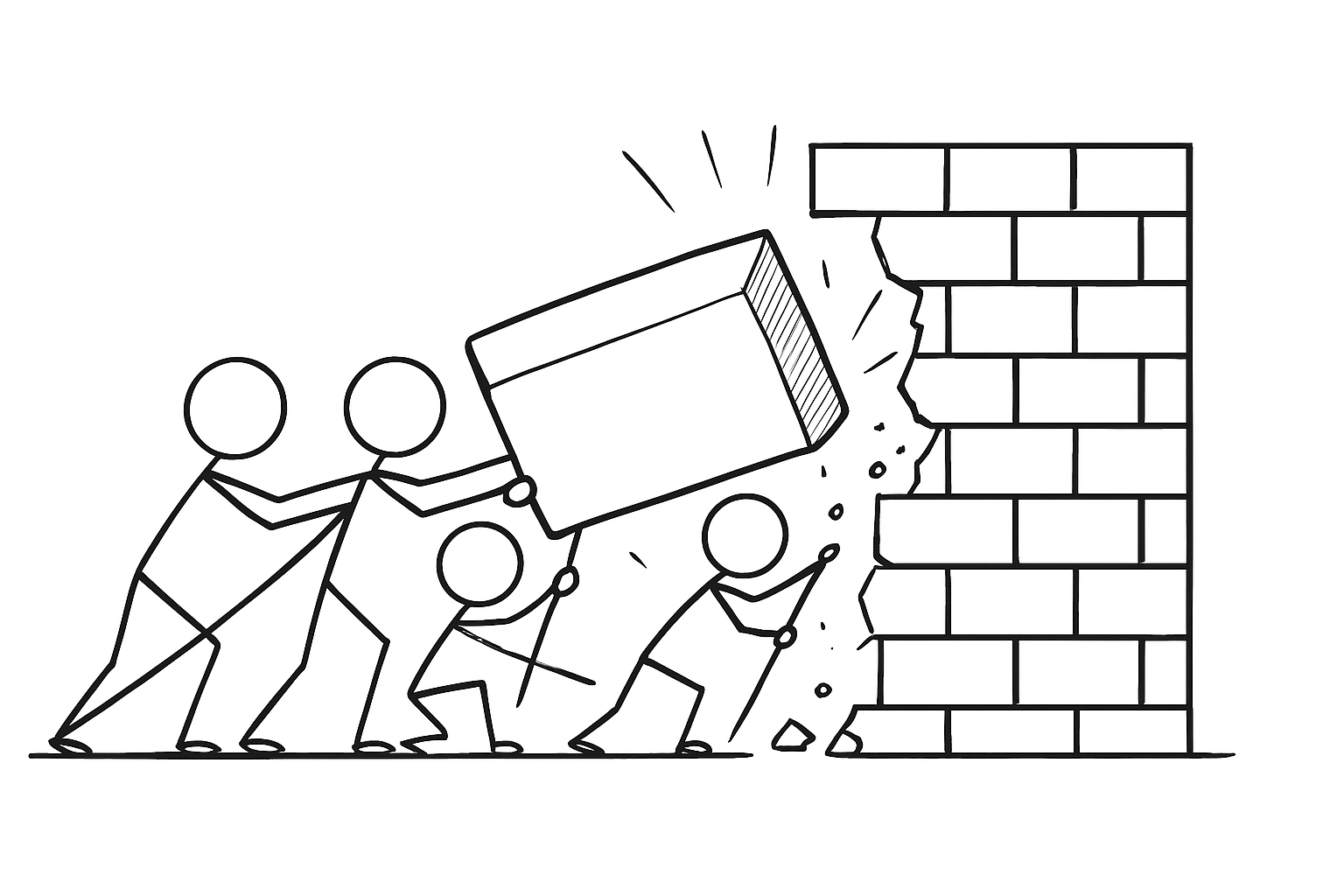
“Remove Barriers” is a change management pattern that eliminates hurdles—whether structural, procedural, cultural, or human—that block people from acting on the vision and making change happen. It’s part of John Kotter’s 8-Step Change Model (Kotter, J. P.,2012, Leading Change.) —specifically, “Step 5: Removing barriers and obstacles” and plays a pivotal role in translating vision into action. By this stage, an organization has already built urgency, formed a guiding coalition, created a vision for change, and communicated that vision broadly. However, without removing structural and psychological roadblocks, these efforts can stall. Step 5 is the bridge between strategy and execution.
It requires both systemic intervention and human-centered leadership to remove structural, cultural, and behavioral obstacles. Without this step, even the most compelling visions may wither in the face of inertia or active resistance. Leaders must proactively identify, address, and remove barriers, creating an environment where change is not only possible but inevitable.
Related Patterns
Create a Sense of Urgency, Create Strategic Vision and Initiatives for Change Generate Short Term Wins, Form a Guiding Coalition, , Quick Wins Identification, Communicate Vision, Institutionalize the Change, Enlist a Volunteer Army, Sustain Acceleration, Pilot and Scale, Visible Results/Progress, Success Stories & Storytelling, Sustainability Planning, Minimal Viable Change, Incremental Delivery, Continuous Improvement, Win Amplification, Learning Harvesting
Challenges Addressed
- Significant Challenge / Barrier / Obstacle Prevents Change. A significant challenge, barrier, or obstacle is preventing change from occurring. (Agilists might call this an impediment). Removing the barrier paves the way for successful change.
- Lack of Confidence (Fear of Failure). The significant barrier creates fear that the change effort might fail; removing it increases confidence of change agents and participants in the change.
Symptom Categories
Inadequate skills, training, or resources, Restrictive organizational structures or systems, Supervisors/managers blocking change efforts, Lack of authority or empowerment, Conflicting priorities or processes, Technical or infrastructure limitations, Fear of failure due to lack of support, Lack of Engagement and Participation, Skepticism and confusion about change, Anxiety over Personal Impact of Change, Ineffective communication
Detailed Description
Kotter’s “Enable action by removing barriers” is the fifth step in his 8-step change management model, representing a critical transition from planning to execution. This step focuses on eliminating the obstacles that prevent employees from acting on the shared vision established in earlier steps.
The primary goal is to create a supportive environment where people feel confident to take risks, make decisions, and contribute to the change without unnecessary hindrances. This step emphasizes empowerment, collaboration, and problem-solving to maintain momentum.
Key Components of “Remove Barriers”:
1. Identifying barriers
The primary focus is conducting a systematic barrier audit to identify what specifically prevents people from executing the vision. Organizations must examine their structure, asking whether current reporting relationships and decision-making processes support or hinder the change initiative. Per Kotter (Kotter, J. P.,2012, Leading Change), barriers to change can take many forms, including:
- Structural: Outdated processes, organizational hierarchies, rigid reporting relationships, that inhibit cross-functional collaboration.
- Systems: Incompatible technology platforms, conflicting performance metrics, or processes that reinforce old ways of working.
- Skill-based: When employees lack the necessary competencies, training, or resources to implement new approaches.
- Cultural: A mindset of “this is how we’ve always done it”
- Political:Individuals or groups resisting change to protect their turf
- Resource-related: Lack of time, budget or access to information
2. Empowering Employees
Leadership plays a crucial role by empowering employees with decision-making authority, removing bureaucratic roadblocks, and providing necessary resources and training. Employees need the authority, tools, and confidence to act on the change vision. This involves:
- Delegating Authority: Giving employees the autonomy to make decisions related to the change initiative without excessive oversight.
- Providing Resources: Ensuring access to necessary tools, technology, training, or funding.
- Recognizing Contributions: Acknowledging and rewarding employees who take initiative and contribute to the change effort.
3. Removing or Mitigating Barriers
Once barriers are identified, leaders must take decisive action to address them. This might include:
- Streamlining Processes: Simplifying complex workflows or eliminating unnecessary steps to make tasks easier.
- Realigning Structures: Flattening hierarchies, reassigning roles, or creating cross-functional teams to improve collaboration.
- Addressing Resistance: Engaging resistant employees or managers through open dialogue, addressing their concerns, and involving them in the change process.
- Providing Training and Support: Offering workshops, mentoring, or coaching to build skills and confidence.
4. Engaging the Guiding Coalition
The guiding coalition, formed in step two of Kotter’s model, plays a crucial role in this step. This group of influential leaders and stakeholders should:
- Act as role models by demonstrating commitment to the change.
- Advocate for removing barriers by leveraging their authority to influence policies
- Communicate successes to build momentum and encourage others to act.
5. Fostering a Culture of Action: Enabling action requires creating a culture that supports risk-taking and adaptability. This involves:
- Encouraging Feedback: Creating channels for employees to voice concerns or suggest improvements without fear of reprisal.
- Celebrating Small Wins: Recognizing early successes to build confidence and momentum
- Celebrate early adopters and problem-solvers: Publicly recognize people who overcome hurdles or help remove them.
Challenges and Solutions
- Scope: Organizations often underestimate the scope of barriers or focus only on obvious structural impediments while missing cultural or psychological obstacles.
- Communication: Lack of adequate communication creates confusion about new processes or expectations.
- Resistance from Leadership: Middle managers or senior leaders may resist changes that threaten their authority or comfort zones. Engaging them early and addressing their concerns is critical.
- Resource Constraints: Limited budgets or time may hinder efforts to remove barriers like outdated systems or lack of training.
- Balancing Speed and Stability: Removing barriers too quickly (e.g., dismantling processes without replacements) can create chaos, so changes must be strategic and well-planned.
Best Practices
- Engage Employees Early: Involve employees in identifying barriers to ensure their perspectives shape solutions.
- Act Swiftly: Address barriers promptly to maintain momentum and demonstrate commitment to the change.
- Communicate Transparently: Keep employees informed about why and how barriers are being addressed to build trust.
- Monitor Progress: Regularly assess whether barriers are being effectively removed and adjust strategies as needed. In other words, treating barrier removal as ongoing process.
- Leverage Quick Wins: Highlight early successes to show that action is possible and encourage broader participation.
Use When
The Removal of barrier pattern is most effective in the following scenarios in an organizational change initiative:
- When Cultural or Structural Inertia obstruct Progress: There are situations, where even after team(s) start well for a transformation, they run into challenges created by the invisible rules of the organization. These are barriers hidden in the culture, power dynamics, or legacy systems. Common forms include risk aversion, hierarchical ersistance, informal gateleeping etc. Removing them may involve hard decisions like, redefining roles or responsibilities, retiring policies, not just editing them, addressing toxic behaviors that suppress initiative.
- When Early Adopters Start Taking Initiative — and run into walls: When some proactive people or teams begin experimenting or taking action based on the new direction, but they run into certain challenges like delay in approval, or not granted authrotity or access to system or similar situations. Failure to remove these walls would result in disillusionment of the early adopters and others to lose interest and the organization may quietly revert to the status quo
- Employees express willingness but face red tape (bureaucratic procedures, approval loops, outdated policies).
- There’s inefficiency in processes or tools slowing down execution.
- Certain leaders or departments are protecting the status quo.
- Cross-functional collaboration is blocked by silos.
- There’s fear of failure or lack of psychological safety among staff
- People are generally motivated to contribute, but may feel powerless if old systems, structures, or hierarchies block them.
- Momentum risks fading if the organization doesn’t clear the path for action.
Do Not Use When
The Short Term win pattern is not suitable for every situation, particularly when the scale or urgency of the change does not warrant a broad leadership effort. It is best avoided when:
- When barriers are intentionally in place to protect critical controls
-
- Some “barriers” aren’t accidental—they’re safeguards (e.g., financial controls, safety procedures, compliance requirements).
- Removing them without replacing them with equally strong safeguards can expose the organization to risk, legal penalties, or ethical issues.
- When the root cause isn’t actually a barrier
-
- If the real problem is lack of alignment, unclear strategy, or weak leadership commitment, removing “obstacles” like processes or roles won’t help.
- In these cases, the barrier removal step becomes a distraction from deeper strategic or cultural fixes.
- When the change vision itself is still unclear or unsupported
- If stakeholders don’t understand or agree with the change vision, removing barriers may lead to chaos rather than momentum.
- Without shared understanding, people may use their “new freedom” to pursue conflicting priorities.
- When people need constraints to innovate effectively
- Too much freedom, too early, can overwhelm teams or dilute focus.
- Some constraints (clear boundaries, phased timelines, agreed priorities) actually help creativity by preventing aimless effort.
- When the “barrier” is a critical dependency that can’t be removed yet
- g., removing a legacy system before a replacement is ready could halt operations.
- In such cases, barrier removal must be sequenced carefully—sometimes the right call is to temporarily work around the barrier rather than eliminate it immediately.
- When barrier removal creates new resistance
- If certain stakeholders view the “barrier” as part of their role, authority, or identity, removing it too abruptly can trigger defensive pushback and slow down change.
- These require relationship building or role redesign first.
In Framework
1. Kotter’s 8-Step Change Model
John Kotter’s 8-step change model explicitly incorporates the idea of “short-term wins” as a critical component for sustaining momentum during organizational change. Specifically, it is embedded in Step 5: Enable Action by Removing Barrier. Kotter emphasizes that achieving and celebrating short-term wins helps build momentum, maintain stakeholder engagement, and demonstrate progress toward the larger vision. In essence, Kotter embeds short-term wins as a deliberate strategy to break down the long-term change process into manageable, motivating steps, ensuring sustained effort and reducing resistance. Without these wins, momentum can stall, and the change initiative risks failure.
2.ADKAR Model
Kotter’s “Enable Action by Removing Barriers” and the ADKAR framework intersect powerfully at the team level because team barriers are rarely just structural—they’re also capability and motivation barriers in disguise. ADKAR provides the diagnostic lens to understand what type of barrier one is actually addressing. When teams can’t take action, the barrier might be a Knowledge issue (unclear processes, missing documentation), an Ability issue (lacking skills, tools, or time), or a Reinforcement issue (legacy metrics rewarding old behaviors, or systems making the new way harder). By asking “Where is the team stuck in ADKAR?” alongside “What barrier needs removal?”, one gains precision in identifying whether a team’s resistance stems from not knowing how to change or from incentives pulling them back to old ways.
The practical power of combining both frameworks is that Kotter gives you the structural levers to pull while ADKAR gives you the human indicators to watch. Diagnose using ADKAR—through team surveys or interviews—then remove barriers with surgical precision: clear information barriers for Knowledge gaps, provide resources and coaching for Ability gaps, and realign systems and incentives for Reinforcement gaps. This prevents the common mistake of removing the wrong barriers (like providing training when the real issue is misaligned incentives) or declaring success prematurely. Effective barrier removal means understanding what’s blocking progression through the ADKAR stages, strategically enabling each phase of adoption rather than just clearing generic obstacles.
3. SAFe Agile
Kotter’s “removing barriers” step focuses on empowering people by eliminating obstacles that prevent them from acting on the change vision. In SAFe, this concept is operationalized through several mechanisms: Relentless Improvement (one of SAFe’s four Core Values) makes barrier removal continuous rather than a one-time event, while Inspect and Adapt ceremonies at every level systematically surface and address impediments. SAFe leaders – Lean-Agile leaders, RTEs and Scrum Masters – are explicitly responsible for removing organizational silos, outdated policies, and bureaucratic processes that slow teams down.
SAFe then turns those barriers into real work via improvement backlogs and enabler work. At ART and Portfolio levels, impediments become funded changes: architecture enablers, policy changes, new ways of working, or org structure tweaks. When leaders actually prioritize and deliver these improvements, they are effectively doing Kotter Step 5 inside the SAFe cadence—making it easier and safer for teams to execute the new way of working.
4. Agile Change Management Frameworks (Lean, Kaizen, Agile)
A core principle is removing impediments (waste, blockers, bureaucracy) so teams can deliver value smoothly. In Agile framework, for example, progress depends on continuously identifying and eliminating impedimens for the team – directly aligned with the “remove barriers” pattern.
5. Kotter Accelerator (Dual Operating System)
Kotter’s Accelerators run a fast-moving “network” alongside the line org, and removing barriers is what lets that network actually deliver. Heavy approvals are replaced with clear guardrails, decision rights at the edge, and lightweight governance (e.g., weekly 30-min syncs, silent consent). A visible Barrier Backlog with SLAs is maintained with executive air cover to clear cross-org blocks, and fund rapid pilots with micro-budgets. Success is measured with metrics like idea to pilot lead time, % blockers resolved within SLA, decisions made without escalation, and policy/standard-change adoption. Shadow bureaucracy of permission is avoided and auditable autonomy is prioritized over centralized control.
How to Use
- Identify Potential Leaders
Look for people with influence, expertise, credibility, and commitment.
Include both formal leaders (executives, managers) and informal leaders (respected employees). - Form the Group
Bring together a manageable number (typically 5–15 people, depending on the organization’s size).
Ensure diversity in role, department, and perspective. - Develop Trust and Teamwork
Hold workshops, retreats, or strategy sessions to build relationships and clarify the mission.
Address any interpersonal issues or power dynamics that could undermine collaboration. - Clarify Roles and Responsibilities
Define what the coalition will do (e.g., develop strategy, communicate change, address resistance).
Assign responsibilities such as change champions, communication leads, or liaisons to departments. - Empower the Coalition
Provide resources, access to decision-makers, and visibility.
Ensure senior leadership publicly supports the group. - Maintain Momentum
Meet regularly to review progress, share feedback and adjust tactics
Celebrate early wins and continuously communicate successes across the organization.
Use When…
Advantages
There are many advantages in using the “Removal of barrier” pattern, including:
- Accelerates Implementation Speed: Removing barriers reduces the time between decision-making and action, enabling employees to move quickly from understanding to execution—crucial in competitive environments.
- Increases Employee Empowerment and Engagement: Systematically removing obstacles demonstrates trust in employees’ capabilities, leading to higher engagement as people see leadership actively clearing their path to success.
- Reduces Frustration and Change Resistance: Proactive barrier removal prevents frustration from building and maintains positive momentum throughout the change process.
- Improves Resource Utilization: Eliminating barriers redirects valuable resources toward productive change activities, improving return on investment for change initiatives.
- Creates Visible Leadership Commitment: When leaders actively remove barriers, it sends a powerful message about genuine commitment that builds more credibility and trust than verbal communications alone.
- Enables Cross-Functional Collaboration: Identifying and removing barriers across departments builds essential cross-functional relationships while eliminating immediate obstacles.
- Prevents Change Initiative Stagnation: Active barrier removal keeps change efforts moving forward and prevents systems from reverting to their previous state.
- Builds Organizational Learning Capabilities: The barrier removal process develops problem-solving skills and creates processes for ongoing obstacle identification that become valuable for future changes.
- Enhances Change Communication Effectiveness: Eliminating the gap between what is communicated and what employees can accomplish makes change communications more credible and actionable.
- Supports Cultural Transformation: Addressing cultural obstacles like outdated policies or rigid hierarchies enables specific initiatives while shifting toward more adaptive organizational cultures.
Disadvantages
There are also potential disadvantages in “Removal of barrier”, including:
- Risk of Removing Necessary Safeguards: Some “barriers” maintain quality, safety, compliance, or security. Removing them without proper replacement can lead to regulatory breaches, safety hazards, or financial exposure.
- Potential for Organizational Chaos: Lifting constraints without clear replacement structures can cause employees to work in conflicting directions, create ambiguous decision-making authority, and fragment processes.
- Encouraging Premature Change Actions: Removing barriers before the change vision is fully understood may lead to actions inconsistent with strategy, misaligned resource spending, and lowered morale when early efforts are reversed.
- Risk of New Barriers Emerging: Removing a barrier without addressing underlying causes may create new, less-visible obstacles elsewhere, yielding minimal net benefit despite the effort.
- Misdiagnosis of the Real Problem: A “barrier” might be a symptom, not the root cause. Removing a perceived obstacle may not solve the real issue, leading to wasted effort and persistent problems.
- Resource Intensive and Costly: Barrier removal often requires substantial financial and human resources that may divert funds from other critical business operations or change activities.
- Loss of Productive Constraints: Not all barriers are bad—certain constraints focus team creativity, encourage problem-solving within boundaries, and maintain quality by preventing reckless decision-making.
Additional Notes
Sources:
1. Kotter, J. P. (2012). Leading Change. Boston, MA: Harvard Business School Press.
2. Kotter, J. P. (2014). Accelerate: Building Strategic Agility for a Faster-Moving World. Boston, MA: Harvard Business Review Press.
3. Kotter, J. P. (1995). “Leading Change: Why Transformation Efforts Fail.” Harvard Business Review, March–April.
4. Kotter International. (n.d.). “The 8-Step Process for Leading Change.” Available at: https://www.kotterinc.com/methodology/8-steps/
5. Harvard Business Review Press (2012). HBR’s 10 Must Reads on Change Management. Boston, MA: Harvard Business Review Press.